Dec 10, 2017 | Tid Bits
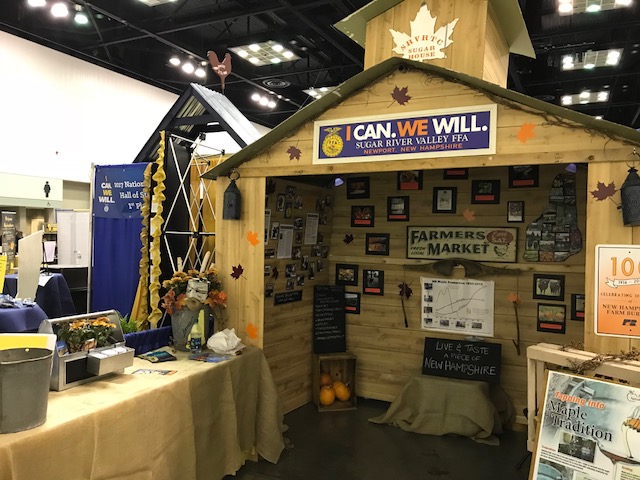
The Sugar River Valley FFA Chapter recently traveled to Indianapolis for the National FFA Convention. In addition to the competitions, speakers, workshops and career expo, the students created a masterful state display representing New Hampshire. Highlighting the state’s maple industry, the students manned the booth in the Hall of States Exhibit throughout the convention interacting with students and guests. When the display judging was over, New Hampshire came out on top in a tie with California. Congratulations to the Newport FFA Students!
Dec 10, 2017 | Tid Bits
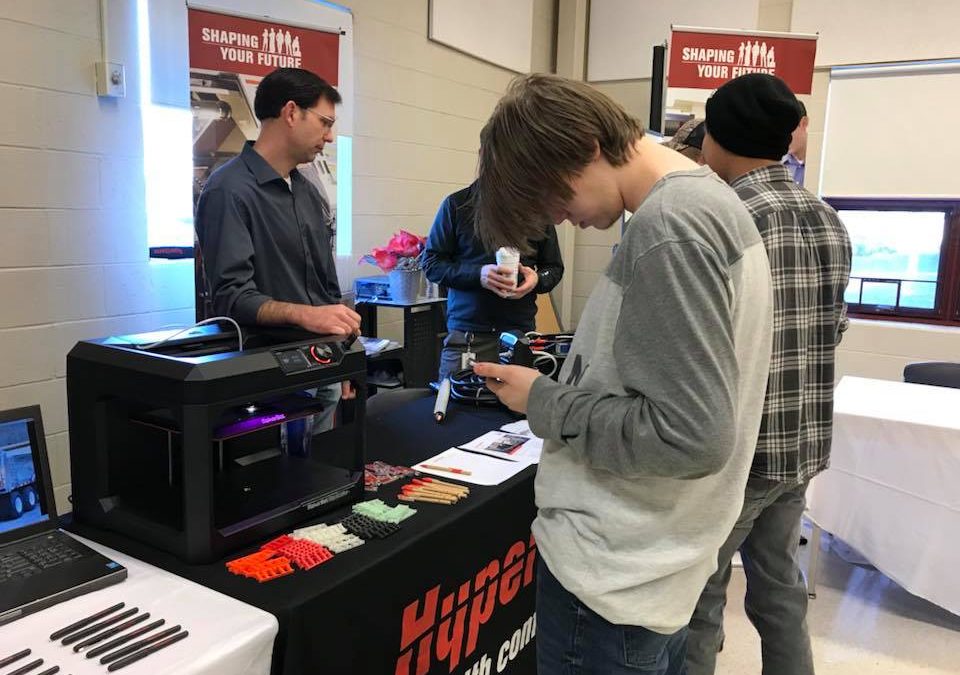
Sugar River Valley Regional Technical Center was home to the first Sullivan County Regional Career Pathways Fair. Middle and High School students from the district had the chance to explore county educational and employment opportunities. Agricultural Science, Health Science, Manufacturing and Technology clusters were highlighted with information on secondary and post-secondary CTE programs. Area businesses were on hand with hands-on interactive materials to engage and inspire students while discussing career skills and future employment possibilities.
Dec 8, 2017 | Article
With NH currently facing a workforce shortage that is only expected to grow more serious in the next few years, the HR State Council of New Hampshire has become an increasingly important and vocal resource.
“Our focus is to support the HR community through legislative efforts, networking events and a variety of HR related initiatives, including workforce readiness,” said Tim Dabrieo, Director, HR State Council of New Hampshire.
In discussing the connection between HR professionals and workforce development issues, Dabrieo said they are the ones who “do the hiring.”
“They can’t find people,” he said. “We need to get HR professionals past today and thinking about three years from now.”
According to Robyn Chadwick, Director of Workforce Readiness, an initiative of the HR State Council, one way to assist the HR community is by helping schools better connect with industry. Career days, she said, represent one such resource.
“These are events where employers can come into schools and discuss what they do, what they need, and opportunities that exist right now at their company,” she said. “These events are increasingly important resources for schools and industry.”
Dabrieo agreed and said another area of focus for the HR State Council is to help secondary schools develop meaningful internships and work-based opportunities for students.
“We want to help employers take a more active role in helping develop curriculums that meet workforce needs—whether it is in healthcare, hospitality, manufacturing or other key industries,” he said.
Chadwick added, “It’s about career pathways and sparking that interest in students.”
In addition to helping connect industry leaders with educators, Chadwick said the HR State Council hosts numerous workforce readiness presentations for students.
“They run the full gamut—from how to do a handshake to resume writing, how to dress, set up a LinkedIn profile, create a proper email address or set up appropriate social media accounts,” she said. “We do mock interviews, too.”
In looking to the future, Chadwick said they the HR State Council is part of a broader HR-focused statewide initiative.
“We have educators, industry leaders, and other stakeholders working together and sharing resources to meet the workforce needs of today and tomorrow,” she said. “We can’t work in silos.”
An affiliate of the Society for Human Resource Management (SHRM), the HR Council is joined in this collaborative effort by Manchester Area Human Resource Association (MAHRA), Seacoast Human Resource Association (SHRA) and other SHRM Chapters across the state as well as BIA of NH, Reaching Higher NH, Stay, Work Play, NH Department of Business and Economic Affairs and the Department of Education among others.
As part of this group, which is currently divided into various task forces that will analyze and develop possible solutions to the workforce development gaps that face NH, Chadwick expressed optimism about a possible summit next summer.
“We want to bring teachers in and businesses together to help educate teachers on what really happens day to day inside their businesses what they do,” she said. “We need industry and educators working together to build curricula that align with career opportunities available to the incoming workforce.”
According to Chadwick, the need for collaborative, HR-focused solutions is not theoretical either.
“I’m the Human Resources Manager at Normandeau Associates, a national environmental consulting firm, and I see the need for these solutions today,” she said. “We need young professionals to stay here and keep working here.”
Dabrieo added, “We have talked to CEOs and presidents, and they are all facing hiring challenges…The role of the HR State Council is to help facilitate conversations between industry and educators. We don’t need to reinvent any wheels. We have resources. We just need to let the right people know about them.”
To learn more about the HR State Council of New Hampshire, visit https://nhstatecouncil.shrm.org.

Nov 27, 2017 | Article, Uncategorized
With unemployment rates at historic lows, every sector in industry is struggling with workforce development questions and challenges, which led to a “Conversation Café” this past summer at which numerous stakeholders weighed in on the issue.
The brainstorming session was spearheaded by the New Hampshire HR Council, the Manchester Area Human Resource Association (MAHRA) and Seacoast Human Resource Association in response to a directive from the Society for Human Resource Management (SHRM). In July of 2016 at the 2016 Democratic National Convention, SHRM President and CEO Henry G. “Hank” Jackson stated, “Two-thirds of HR professionals are having a tough time recruiting skilled workers. The skills shortage in the U.S. is a growing problem and will take innovative efforts of government, educational institutions and employers.”1
According to session attendee Doug Cullen, Manager of Career Services at Pinkerton Academy in Derry, there was strong CTE representation.
“We had 2 CTE center directors, 2 staff from Department of Education Bureau of Career Development, the Apprenticeship Bureau, and Community College system,” he said.
The purpose behind the “conversation” was to initially explore how to get a better trained workforce into industry and the appropriate kinds of training and avenues to make that happen in the short-term. As a result of the discussions that took place, five key concepts were raised that the group will explore as the basis for future workforce development and training solutions.
Best practices in experiential and work-based learning opportunities.
How employers can step up (possibly be involved in) designing curriculum to meet industry needs.
Understanding Department of Labor requirements for internships.
Highlighting effective career services possible between schools and businesses.
Identifying training partnerships with businesses.
The group discussions were facilitated by BIANH, Bureau of Career Development, one of the CTE directors, and Reaching Higher NH.
“One thing we are looking at very closely is how to design training mechanisms—mini-videos, off-the-shelf curriculums or other interventions—that can be customized to suit specific needs in industry,” said Cullen, who also served as facilitator.
In furtherance of this effort, a focused task force was formed in October to drill down further into possible solutions with the objective to bridge the gaps between a future workforce pipeline and people to fill it. Cullen said this HR-focused group involves other related efforts, including the Career Pathways State Steering Committee, 2025 Accelerator, 65 x 25, Sector Partnerships Initiative and others.
“We are all facing the same issue, so it makes sense to get us all together in the same room at the same time,” he said.
As for why he became involved in this initiative, Cullen said he wanted to proactively work to solve these larger employment and economic development challenges with many of the people he and others are most likely to encounter when attempting to bridge these gaps.
“I’m not just talking to the engineers, manufacturers or construction foreman, I’m talking with someone from HR,” he said. “We need to get out in front of this as we’re already fighting such significant employment challenges.”