Jun 26, 2016 | Article, Hospitality
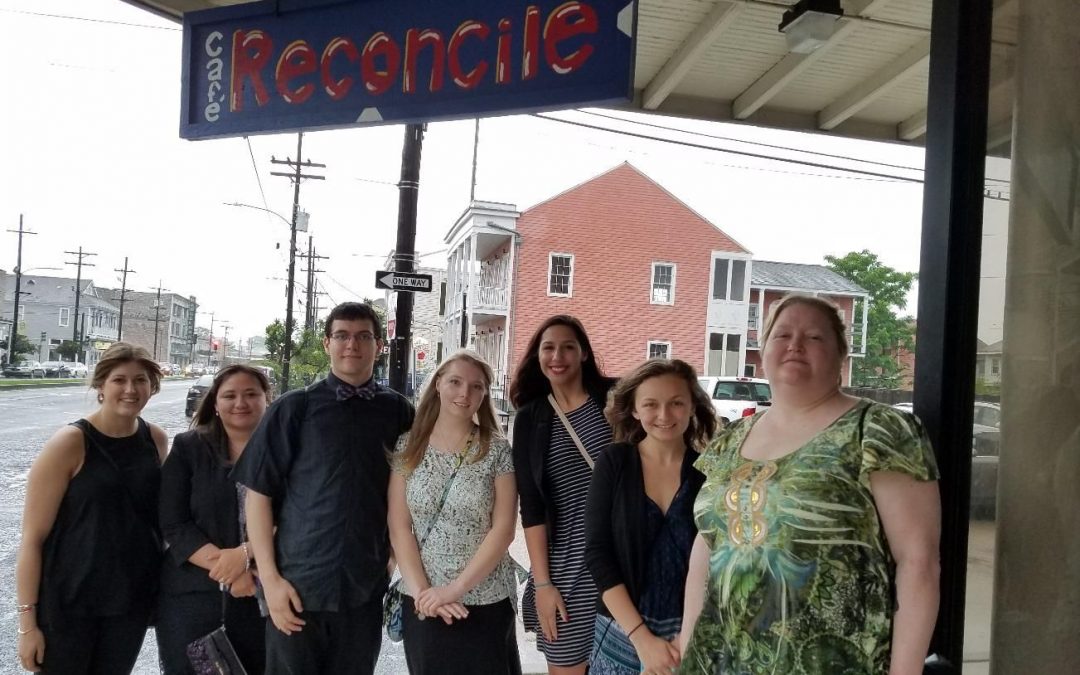
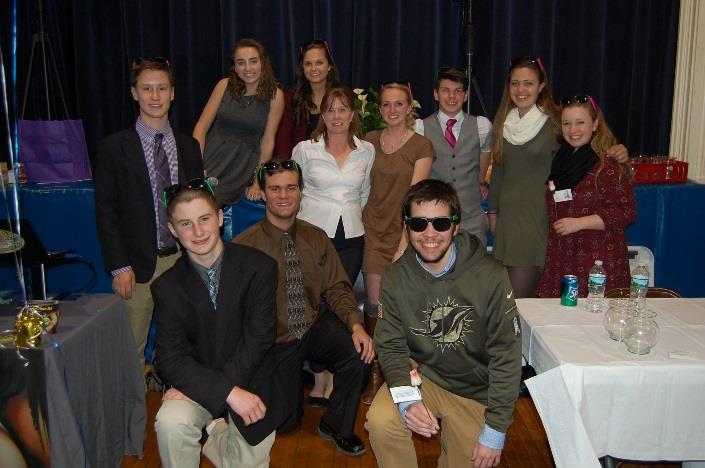
Seven students from the Great Bay Community College Hospitality Club recently returned from New Orleans where they spent time with students and staff at Café Reconcile, a nonprofit restaurant and event center that helps at risk youth.
Open for business since 2000, Café Reconcile teaches life skills to young people (ages 16 t0 22) from severely at risk communities through a job training program in the hospitality industry. Proceeds from events held at the cafe go directly towards funding the facility, equipment, staffing and food making the venue free for any at risk youth who participates.
Participating student and Club President Kait Short said the trip to New Orleans provided her and other students with a unique opportunity.
“Especially in light of current events, the opportunity we had to exchange stories and experiences with Café Reconcile’s students and staff also helped us feel connected to otherwise distant issues,” she said. “The way that they are working to overcome such adversity is incredibly inspiring, and we took that determination and desire for change back to NH with us.”
Describing the trip as “funfilled and busy” ferry rides on the Mississippi River, long strolls on Bourbon Street and a muddy side trip to Jazzfest, Club Secretary Laura Johnson echoed Short’s sentiments. “The highlight of the trip by far was meeting the students and staff at Café Reconcile,” she said.

The experience also provided students with a real world experience with practical benefits. Club Treasurer Katti Mowers said she learned a lot planning the trip, as she noted she worked with a limited budget and overcame challenging logistics. “This was a great learning experience, because I was able to hurdle all of the obstacle, as I would need to in my future as an event planner,” she added.
Short agreed and added, “The process of organizing the trip to New Orleans gave me a unique learning experience that I can apply in my future career as an event coordinator of community or corporate events.”
In reflecting on her two years in the Hospitality Management program itself, Short said it has helped to open doors she does not think would have been possible at a four-year university.
“As a 25 year old student working fulltime, I need a flexible schedule,” she said. “Great Bay has allowed me to earn my degree and real-life industry experience without putting my life on hold.”

Dawn Comito, Great Bay’s Hospitality Management Department Chair and Club Advisor, applauded club members, who volunteered more than 700 hours in the community over an entire year, including assisting the United Way and Strawbery Banke, to fund the trip. In previous years, they have attended professional conferences in Miami, Chicago and Las Vegas.
“In addition to fundraising, the trip would not have been possible however without the many hospitality business and education partners who acted as sponsors, including Portsmouth Brewery, Atlantic Hospitality Group and The Portsmouth Spa,” she said. “The students are very grateful.”
Participating students included Kait Short, Dover; Laura Johnson, Derry; Jessie LaFleur, Candia; Matt Joyal, Farmington; Amanda Doyle, Barrington; Michelle Zannini, Berwick, Maine; and Katti Mowers, Epping.
About the Hospitality Management Program
Great Bay Community College currently offers an Associate in Science Degree in Hospitality Management offering students two concentration options to choose from. The Hospitality Management – Direct Career option is recommended for students who plan to begin their career immediately after graduation from Great Bay. The Hospitality Management University Transfer option, developed in consultation with the Hospitality Management Department at the Peter T. Paul College of Business and Economics at the University of New Hampshire, is specifically designed to prepare students for transfer to a Bachelor of Science in Hospitality Management at a four-year college or university.
Jun 6, 2016 | Article
This past June, thousands of New Hampshire students walked across the stage to receive their high school diploma, which included 150 graduating seniors who attended J. Oliva Huot Career and Technical Center for two years. While the Huot Center does not technically hand out diplomas, the center does take great pride in the graduation plans of its seniors.
“Students in New Hampshire’s Career and Technical Education (CTE) centers are leaving high school more prepared for both college and their future careers,” said Huot Director Dave Warrender. The Huot Center, located in Laconia, is one of over twenty CTE centers operating in the state that offer cutting edge training to high school students.
One method for improving a student’s post-secondary options is the awarding of post-secondary credit while still in high school. The Huot Center currently has dual-enrollment and articulation agreements with several schools, including New England College, Plymouth State University and Central Maine Community College. The center’s largest partnership, however, is with the Community College System of New Hampshire through Project Running Start, which has enabled students to earn hundreds of transferable credits from schools within the CCSNH system.
In 2015, 74 Huot students will enter post-secondary education, 43 of whom will work and attend school at the same time. All together, the Huot class of 2015 earned 221 college credits through the Running Start program at Lakes Region Community College, which saved their families $41,000 in tuition. This year’s Huot graduates also included thirty-eight students secured full- time employment.
Career and Technical Centers Redefined
According to Warrender, CTE Centers have gone through a significant transformation over the past thirty years. “In the 70’s and 80’s, CTE Centers were often defined by ‘who’ they taught,” he said. “The ‘voc’ was thought of as a place for kids who didn’t fit in an academic setting and were not worried about getting ready for college.”
During the computer revolution of the early 90’s, however, he said the vocational center transitioned into the technical center.
“Our focused shifted from who we taught to what we taught,” Warrender added. “Technical centers became the places where students explored programs too specific or too expensive to be replicated at every high school, while schools realized there was a cost-savings to running technology heavy courses in one centralized region.”
Through a consistent focus on technology, job readiness and applied learning, he said CTE Centers developed unique ways of teaching students in full recognition that a high school diploma was not enough for many high tech careers. Today, he said CTE Centers are now defined neither by what or whom they teach, but rather by how they teach.
“CTE centers in our state do a fantastic job of blending applied technical learning with soft skill development and college readiness standards,” he noted. “Students are expected to leave not only ready to get an entry level job, but to also pursue post-secondary education.”
From the Students
When asked how the Huot helped them to become college-and-career ready, students replied with a variety of answers. “The Huot helps you achieve so much more than you would ever imagine,” said Bridgette Robichaud of Franklin, an Allied Health student, who has enrolled in the Dental Assistant Program at New Hampshire Technical Institute.
“My teachers taught me new skills and I reached many great accomplishments,” added Liam Gove, who entered the automotive program from Winnisquam Regional High School and secured a position as a boat technician at Winnisquam Marina. “More importantly, the class taught me how to cope with failure.”
Gove’s sentiments were echoed by Joe Judkins, another Winnisquam student that attended the Building Construction program and one of 10 who has opted to pursue a career in the armed services. “The Building Class taught me many professional and personal skills—this built my self-confidence and ability to decide to join the military,” he said.
For five years running, the Huot Center has achieved a 100% pass-rate on the state exam for Licensed Nurse Assistants. One of this year’s candidates, Nicole Rosas of Belmont, could not be more pleased with her experience. “The program and my required 60 plus clinical hours helped me decide what I wanted to do after graduation,” she said. “My teachers gave me great support and were always encouraging.” Nicole is enrolled in Arizona State University’s Nursing Program and plans on working as a Licensed Nursing Assistant while attending school.
The ability to earn college credits has also been an important consideration for students, as is evidenced by Mikayla Bordeau from the Huot’s Careers in Education program. She earned 14 college credits while in high school, including 11 from her class the at career center. She also secured a position with Lakes Region Child Care Services, Inc. and has enrolled in the Elementary Education program at Plymouth State University.
While the majority of Huot students transition directly into a related field, Dacey Lecuyer, a Culinary Arts student, is taking the teamwork and customer service skills she learned in a different direction. “The program has taught me self-discipline and gave me confidence to be prepared for cosmetology school,” said Lecuyer, who has enrolled at Empire Beauty School in Laconia.
Striving for Real World Standards
At the start of the year assembly, Warrender will pose the students with a few simple questions: Who wants to eat chicken cooked by a C- chef? Who wants to bring their car to the mechanic who puts on 70% of their lug-nuts or go to the nurse who gives you the right medication 7 times out of 10?
“At the Huot—like at all CTE centers—students are taught to keep doing a task until they can do it right,” said Warrender. “The experience of performing a task for an actual customer in many cases carries a weight that engages students and pushes them to not just ‘pass a class,’ but truly strive for excellence.”
He said students who work hard, master skills and go above and beyond earn a reward beyond a grade or credit. “They earn the recommendation of their CTE teacher, a person who has real-world experience working in the career path to which these students aspire,” he added. “This is the key ingredient that helped so many of our graduates land jobs this year.”
There is not just one kind of student that has come to value career and technical education, either, as Warrender said many of the school’s top academic student take CTE classes. During the 2014-2015 school year, the Huot Center inducted 27 students into their local chapter of National Technical Honor Society and handed out a record number of academic and career scholarships to their graduating seniors.
“This year, four of Laconia High Schools top ten students had taken courses at the Huot Center, including both the class salutatorian and valedictorian,” he said. “Huot students are also eligible to earn both honors credit and NH Scholars Recognition for many of their career center course.”
As for the Huot’s Center future, Warrender said it looks bright, while citing an anticipated overall enrollment of about 460-470 students in the fall. “We are seeing a real increase in both student, community and business interest not just here but across the state,” he said. “I think everyone recognizes the time for Career and Technical Education is now.”
Jun 6, 2016 | Article
When NASA calls and offers your students an opportunity of a lifetime, you do not pass it up, which sums up the experience of teacher Andy Shaw at Mount Washington Valley Career & Technical Center. In this case, however, it was an email as opposed to a phone call.
“I opened up my email one day, and it said, “Do you and your students want to make parts for NASA?” he said. “I could hardly believe it.”
According to Shaw, the communication resulted from MWV Career & Technical Center’s placement in a Skills USA Precision Machining Competition in which they placed 17th in the nation. Readily accepting their offer, Shaw said his students experienced “substantial success” in the year that followed manufacturing pre-designed parts.
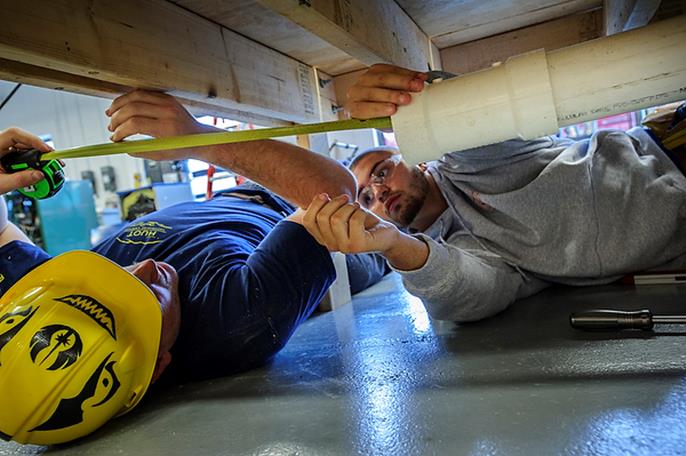
In recent months, however, the bar was raised significantly. As Shaw noted, the MWV Career & Technical Center was approached by NASA to become a Design to Prototype school. At this level of collaboration, students work to develop solutions to problems brought back by astronauts from the International Space Station.
One of only 40 schools in the nation certified to handle material for NASA, Shaw said such a designation has provided students opportunities few ever realize. In late September, NASA and the Goddard Space Flight Center sent people to the Career and Tech Center to talk with students about their collaboration to build parts for the space program.
“The students got to work alongside people from NASA for about 8 hours,” he said. “They made a demo while they were here—it was an incredible experience.”
For Shaw, the best part of the entire experience for him has been how students in the Machine Tool Program have reacted to the increase in responsibility. In his own words, “Students are taking off.”
“Just the look on their faces was priceless when NASA was here,” he said. “You can see kids opening up.”
As for how such opportunities are possible with NASA, Shaw cited High Schools United with NASA to Create Hardware (HUNCH), an instructional partnership that began with high schools and intermediate/middle schools. Within this partnership, NASA receives cost-effective hardware, while students receive real-world hands-on experiences. Additionally, NASA provides materials, equipment and the mentoring required to fabricate the items as well as quality inspection oversight during their fabrication.

“It’s an incredible opportunity for our program and especially for these kids,” said Shaw, who noted his students also raised money to visit the Goddard Space Flight Center in Maryland. “The whole experience has been incredible.”
The focus for students now, however, is their next project, which they have already begun.
“It’s a mechanical pencil for the International Space Station,” he said. “The students and I couldn’t be happier about the project.”
To learn more about NASA Hunch, visit www.NasaHunch.com.
To learn more about MWV Career & Technical Center, visit www.MWVCTC.com.
Jun 6, 2016 | Article
There are many ways teachers and administrators at NH’s Career and Technical Centers help students make connections. At the Seacoast School of Technology (SST), “making connections” begins by teachers building relationships with middle-schoolers through Technology Fun Nights and SST Summer Camps.
At Technology Fun Nights, which run throughout the school year, students participate in events designed to get them excited about the fast-changing world of technology. Topics include everything from basic computer programming and animation to digital design, pre-engineering and more. In December, students will learn about the science, mathematics, engineering, and problem solving found in computer games.

According to Principal Margaret Callahan, these nights literally “sell out” in a matter of hours. “I have parents calling me the day after the last Technology Fun Night to sign up for the next one,” she said. “We have a waiting list of two pages and stop it there.”
Since starting these Technology Fun Nights in 2003, more than 3,500 students from the 5th through 9th grade have attended them. In helping students make connections to the larger community in which they live, they are also asked to bring a voluntary donation of three cans of food per person to donate to a local food bank.
At SST Summer Camps, which have taken place for the past six summers, Callahan said more than 700 students have participated in 15 different career camps. Programs offered this past summer included computer programming, an introduction to culinary arts, automotive engine basics, how to care for animals, and more.
“The summer camps sell out, too,” she said.” People have already started calling and parents line up with checks in hand the day registration opens.”
Morgan Leet ’16, Culinary Arts, Exeter High School, said her experience in SST’s Culinary Arts summer camp helped her find her passion. “Not only did I have a great time, but this experience really helped me decide that Culinary Arts is the path I want to take in my future,” she said. “I learned a lot in the kitchen and I was motivated to practice my skills at home and apply my knowledge.”
Leet’s involvement in SST’s programming did not stop there, however. “After attending the summer camp, I got involved in the SST mentor program and was able to learn even more about what is involved in the profession,” she said. “I also attended two of the SST Chef’s Table nights. Now that I am finally here as a student, I am ready to learn all that I can and I am very excited for a great year.”
Callahan credited “the vision and talents of [their] dedicated teachers” as instrumental toward helping students like Leet. “Many of our current students came to SST once upon a time as middle school students with only a vague idea of their future plans,” she said. “Today, their goals are more focused… We have a great school with generous teachers who offer great things to students of all ages.”
In looking ahead, Callahan said they look forward to expanding their programs as much as possible.
“We are teaching the skills people need to get jobs,” she added. “These programs are relevant and the payback is huge.”
To learn more, visit SeaCoastTech.com.
May 27, 2016 | Article
In April, the Seacoast School of Technology (SST) in Exeter held its 10th Annual Small Business Showcase, which has grown from 20 participating businesses in its first year to 80 businesses and more than 300 attendees.
According to Sandra Flannigan, SST Marketing Technologies Instructor, the purpose behind the showcase is for Marketing Technologies II students to use the skills they learn during their two years in class in a real-life scenario. She said another objective is to work with the Exeter Area Chamber of Commerce and Hampton Area Chamber of Commerce to bring businesses together from the Seacoast area and participate in business to business and business to customer marketing.
“Students start planning the event in December as their capstone project for Marketing Technologies II,” she said. “They use materials from previous years and work together as a group to make decisions on how they will run it this year. They are responsible for every aspect of the event. Students make many phone calls to get businesses to commit to attending, advertise for the event and they must solicit for door prizes as well.”
In planning the event, she said students break into four separate groups: Sponsorship, Logistics, Promotions and Marketing, and Exhibitor Relations. “They plan the menu and work with our Culinary Arts program to provide hors d’oeuvres,” she added. “They also needed to make sure the room is set-up perfectly and that everything runs smoothly.”
Flannigan said the best part about the event is that students actually plan and execute it, as she acknowledged she only works as an advisor if they have any questions. “They are free to change the event year to year so that it will be successful with their own spin on it,” she said. “Students learn how to work with others, gain leadership skills and experience all the details that go into planning a successful event.”

May 27, 2016 | Article
On April 21, HUOT Technical Center Hospitality students took first place in the 2016 Hospitality and Tourism Management Program (HTMP) State Invitational at the Grappone Conference Center in Concord. In addition to a trophy, individual medals and a $1,000 scholarship to their school’s HTMP program, each member of the team was awarded scholarship money to Johnson Whales University and the UNH Hospitality Management Program.
Emily Owens, Education Coordinator at the New Hampshire Lodging & Restaurant Association, referred to the event as “New Hampshire’s premier hospitality industry competition.”
“During this intense competition, participating teams demonstrate their knowledge of the hospitality industry by participating in five separate contests based on real life events and situations,” she said. “From room inspections and accounting night audits to a jeopardy like knowledge bowl, these students put their skills to the test.”
According to Owens, the competition includes the following:
- Room Inspection – Students must analyze a hotel room to find a specific number of “errors” made by the housekeeping department. Examples of “errors” are missing towels, trash not emptied, remotes not working, etc.
- Night Audit and Hotel Accounting Calculations – Students must complete a night audit for a fictional situation and guests. Students must also complete common hotel accounting calculations.
- Case Studies – Students must analyze and present solutions to three different case studies. The case studies focus on the areas of: Food and Beverage, Guest Services and Sales and Marketing. All three case studies are relative to the hospitality industry.
- Hospitality Project – Students are given basic information with specific parameters regarding size and budget and must plan an event from beginning to end. Students need to include a detailed menu, room layout, event timeline and completed BEO. Students will then “pitch” their event to the judges.
- Knowledge Bowl – The knowledge bowl is a jeopardy like contest where teams compete against each other, testing their knowledge of hospitality vocabulary.
As for the kinds of skills students learn within the program, Owens cited skills relative to the hospitality industry, specifically hotel and lodging, including guest services and operations, housekeeping, sales and marketing, and maintenance among others. Other skills include event planning and hospitality leadership skills, including operational and managerial skills.
“It is important for students to learn these skills so that we have educated and talented individuals heading into the hospitality industry,” she said. “The NH hospitality industry is a significant source of revenue to the state and is an ever growing industry. It is important that our schools continue to produce quality employees for the industry.”
<h4>About HTMP<h4
HTMP is a two-year school-to-career program developed by the American Hotel and Lodging Educational Institute (AHLEI). HTMP is designed to introduce high school juniors and seniors to careers in the hospitality industry. Through classroom activities, internships and comprehensive exams, students have the chance to earn national certification. For more information Click Here.
May 27, 2016 | Article
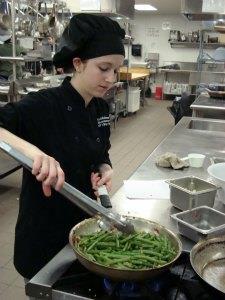
What differentiates a career and technical education program from traditional academic instruction is its emphasis on providing real world opportunities for students to demonstrate and apply their learning. At the Seacoast School of Technology (SST) in Exeter, this concept is seen in action nearly 7 days each week, as Culinary Arts students routinely plan for and execute meals for anywhere between 200 and 2,000 people.
According to Instructor James Collins, SST’s Culinary Arts Program differs from that at most other Career and Technical Schools around the Granite State. “The SST culinary arts kitchen is built with ‘scale’ in mind,” he said. “What scale enables and requires is a familiarity not only with various size, capabilities and differences in equipment, but also the math that goes along with it. Other important learning outcomes include timing and logistics.”
He cited the variety of ovens as one example of scale, as he noted the SST kitchen relies less on redundancy than some other kitchens, which enables students to learn in different ways.
“Ovens in the SST kitchen range from a simple deck oven used for pizzas—the current one is original to the beginning of the program—to a large combination convection oven, a conventional oven, steamers and a portable electric oven,” he said. “Having this level of choice causes the student to think strategically to match the job to the tool. It also prepares them some of the more advanced decision-making expected of an employee in a real-life application.”
He said what is equally significant about the SST kitchen is its work flow and set up.
“Our prep benches are unique and custom-designed and often emulated now,” he said. “We have 7 hand wash sinks to enable students to begin their lab assignments quickly, maximizing lab time. We have a commercial laundry setup designed to handle the multiple loads of laundry done each day. Our finishing line is better equipped than most local restaurants.”
In addition, he said their dining room is designed as a multi-purpose room with large capacity and two air walls to shrink the room to accommodate small groups he said it also has hookups for state-of-the-art audio visual technology.
SST’s state of the art kitchen is not the result of luck, however, but rather the result of an intentional planning process that began a couple years before the school’s renovation in 2008. According to Collins, committees were formed to conceptualize what SST would look like to the community in terms of programs offered, their scope and other relevant details.
“The instructors were encouraged to participate and use students and others, such as their advisory committees and outside stakeholders, to help ‘design’ their ideal learning/teaching environments,” he said. “In the case of culinary, I was fortunate to have a chef from UNH, Exeter’s Health Inspector, some other folks from the industry and students to help put together a plan for review.”
He said it was during these discussions that “scale” began to take shape as a way to differentiate SST’s Culinary Arts program from others in the state.
“Given the culinary interest in the Seacoast area, we wanted our students to be able to go out into industry prepared for what they would encounter in regard to food preparation techniques, presentation and service,” he added.
May 27, 2016 | Article
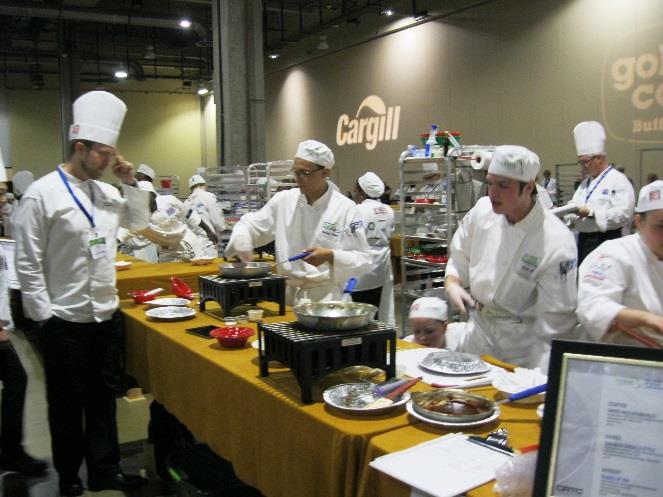
Competing for the first time in any ProStart competition, Concord Regional Technical Center Culinary students made it all the way to the National Invitation from April 29 to May 1 in Dallas, Texas. Placing 22nd out of 46 teams, the team had an incredible experience, according to Culinary Arts Student Chase Haines, who served as appetizer cook at the competition.
“It was great to work with such high-end chefs and to receive job opportunities from them as well as excellent critiques on our dishes,” he said. I think it’s safe to say, we all had an incredible time as a team at the Gaylord Hotel. We also got to hang out with a bunch of other teams from around the country.”
Despite it being their first time competing at such a high level, Chase said the entire team felt confident upon arrival. “We knew what we had to do and the only thing left was to execute it,” he added.
In summing up the team’s performance at the nationals, Bob McIntosh, Chef Instructor at Concord Regional Technical Center, applauded their hard work and determination in just getting there. He said they also responded quite well to adversity in the competition itself.
“At one point, they were 13 minutes behind their normal timing, but pulled together as a team and were able to make up all but 1 and a quarter minutes,” he said. “The judges’ critiques were very favorable in all segments, including telling them that they aced the recipe and costing book.”
Noting it is unusual for a school to enter a ProStart Competition and compete well enough to go to the nationals, McIntosh commended the students’ work ethic and passion for food. He also cited the structure of the ProStart competition format at the state, regional and national levels as noteworthy.

“All of the competitions were well run and staffed by professionals who gave the students very informative critiques, taking time to teach and mentor as well as judge,” he explained. “We had lots of support from many chefs as well as industry mentor, Chef Gary Sheldon. It was also very helpful that the NHLRAEF and the sponsors were able to finance most of our trip to Texas.”
May 27, 2016 | Article
Since 2010 in the Nashua School District, the Kick Start High School summer program has been offered to a select group of rising freshmen who are not meeting their full potential in school due to poor attendance, performance or test scores.
According to Martine Cloutier of Careers in Education 1 at Nashua High School South, these middle school students are identified and referred by their guidance counselors in an attempt to give them a “kick start” to their high school credits.
“The program is designed to focus on enhancing literacy, numeracy and science skills while demonstrating these skills in real word experiences,” she said.
The Career and Technical Education component is offered during the last 2 weeks of the program as an incentive to get through the summer program and to demonstrate the use of the skills they are learning through hands on applications.
“Students are introduced to 5 different CTE programs through a round robin event that presents them with some of the CTE programs offered at both Nashua High School North and Nashua High School South,” she said. “Students then prepare for interviews, complete with cover letters, and do a rotating interview session with the separate CTE instructors. Once accepted, students participate in 2 different CTE programs.”
According to Cloutier, the Kick Start curriculum incorporates the use of literacy, numeracy and science and helps students make connections to the importance of these skills in potential career pathways after high school.
“This program also helps students gain confidence before coming to high school as they get familiar with the learning environment they are to be part of in the fall,” she said.
Reaction by students has been equally positive, some of whom cite profound benefits. Ciara O’Brien, 11th grader at Nashua High School North, said, “The thing I like the best was how it taught me more responsibility skills and shaped me into a better person…I also learned that being in a CTE will give you more experience and also a chance to get a feel of the career you want to pursue.”
In O’Brien’s case, her participation in Kick Start altered her career aspirations, as she began the program with the intent to become a nurse, but left it with a desire to become a preschool elementary school teacher. She is currently enrolled in Careers in Education.
Samantha Diorio, 11th grader at Nashua High School North, said she also experienced a similar change of heart after completing the program.
“Before Kick Start, I wanted to be a vet or someone who is involved in animal rescue,” she said. “I’ve always had an interest in film—and taking video production in Kick Start [rekindled] my film interest and now I hope to someday be a director.”
According to Cloutier, interest in the program continues to grow with “a significant amount of Kick Start students enrolling in our CTE classes once they are eligible to sign up.”
“The students we have in our current classes come in with an advantage, having had a chance to do some training over the summer,” she added. “It’s a great program.”
Apr 19, 2016 | Article
The result of a discussion at a Public Relations Committee meeting in the spring of last year, the Ambassador Program at Nashua Technology Center (NTC) has experienced significant success in just its first year. According to Instructor Jeff Leone, who helped develop the program along with Martine Cloutier and Judith Loftus, the impetus behind it was to help current CTE students meaningfully connect with potential prospects.
“In talking with students currently enrolled in CTE programs, many indicated that ‘word of mouth’ and actually having seen the classrooms—a tour, passing in a hallway, having a friend in the program—often was the way they learned about our programs,” he said.
Upon returning to school in the Fall of 2015, he said they asked other CTE instructors to nominate between 3 and 5 of their strongest students to serve as NTC Ambassadors.
“We ended up with over 40 students nominated,” he said. “Ambassadors were asked to attend an initial information meeting where the program was explained to them and applications were completed. We also had the opportunity to speak with these outstanding students about their experiences in the CTE programs and the message they would want to share with other students.”
He said one of the primary goals of the Ambassador Program was to have student representation of their CTE programs at various events throughout the school year. He noted that the biggest event in which the Ambassadors participated was their CTE Round Robin event held the week before course selection. Noting most CTE programs are 2 year programs with students typically beginning in their junior year, Leone said the event provided ambassadors from each CTE program with the opportunity to meaningfully talk to the sophomore class.
“These younger students then had an opportunity to try out the program through a ‘hands on’ experience during our school’s ‘e-block’ period,” he said. “Because the activities were hands on, it was a great way to engage potential students and promote the programs—and because the event was held right at the start of course selection, the courses were fresh in the minds of students.”
What is next?
According to Leone, ambassadors are currently providing tours of CTE programs to administration, community members, and middle school students that visit the high school. He said they have participated in elementary and middle schools’ STEAM nights and will also be involved in their ‘Push Up Night’ for rising 9th graders.
“In the coming months, our CTE instructors will select the next ‘crop’ of students to be Ambassadors for next year and our current Ambassadors will train them,” added Leone, who noted that preliminary numbers show increased CTE enrollment.
Current ambassadors may be the predictor for the program’s ultimate success, as many have expressed enthusiasm regarding their experience. One current ambassador remarked, “I’ve been able to promote a class I love and see other people get excited to take it. I’ve also been able to see what other CTE programs are like, which can be helpful when helping someone figure out what classes they should take.”
Expressing excitement at its future, Leone said the Ambassador Program underscores a very important message, which he hopes reaches communities outside CTE.
“Career and Technical Education is real life education,” he explained. “It prepares students for what they can expect in the real world, gives them hands-on experience, and simulates real life situations.”
He also expressed admiration and respect for the role the ambassadors have played in the program’s initial success.
“These students are the best of the best,” he said. “They are practicing their skills learned in their respective classes by selling it to others, teaching skills they have learned, and sharing their experiences, and how it has helped mold them as a future professional and as a person.”