Feb 7, 2017 | Article
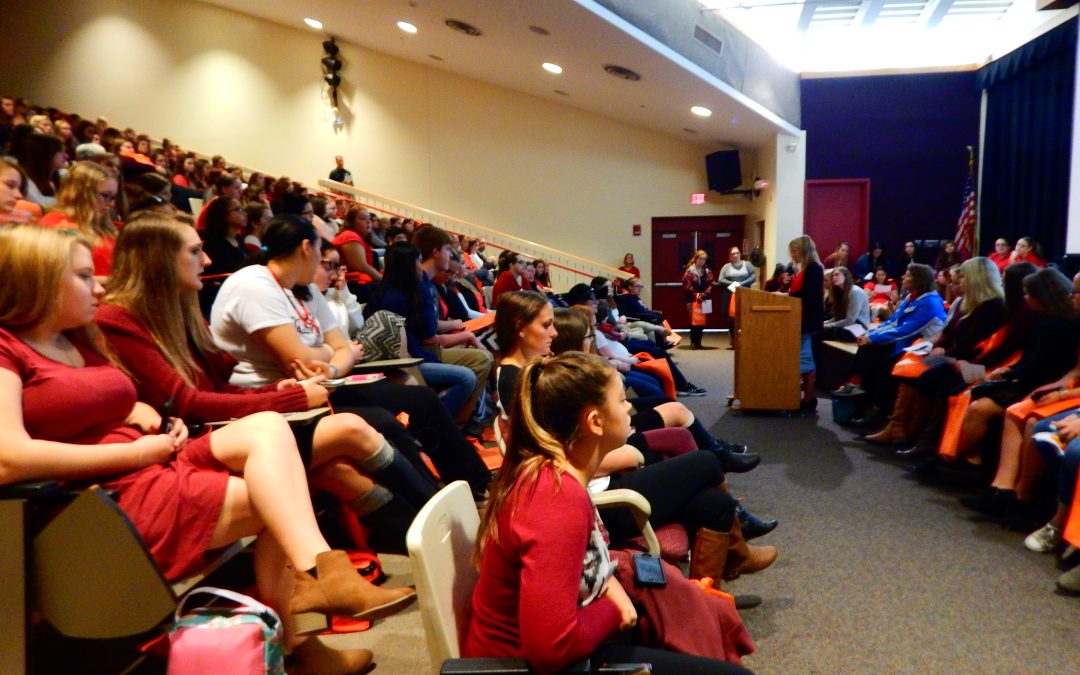
In October of last year, Educators Rising NH hosted its first fall TEACHERFEST on the campus of NHTI- Concord’s Community College as a way to expose students to NH colleges that offer degrees in education. Designed as a professional development day for high school students who attend CTE Teacher Education programs throughout the state, TEACHERFEST consisted of various mini-workshops on professional topics related to careers in education, curriculum areas, and teaching methods.
Noting approximately 350 Teacher Education students and teacher leaders from nine NH CTE centers were in attendance, Concord Regional Technical Center’s Valerie Koch, who helped organize it, said TEACHERFEST underscores a real need.
“Over 60% of teachers teach within 20 miles of where they went to high school,” she said. “We believe these future teachers understand the unique needs of our community and will be committed to serving children in their own region. We are hoping that Educators Rising NH will help to create a pipeline of quality teachers who earn degrees in our state and then stay in NH to teach and positively impact students and schools.”
Educators Rising NH is a organization that supports high school students who are interested in pursuing a career in the field of education. Educators Rising NH was officially approved by the NH Department of Education in June 2016 as a Career and Technical Student Organization (CTSO) and is an affiliate of the national organization, Educators Rising.
Sue Bergman, who coordinates the effort statewide for Educators Rising NH, said she wants students and teachers alike to know there is support for them. Our organization and website offer a ton of resources,” she said. “Educators Rising might be new in NH, but it is a terrific national organization…We want to continue to grow our membership here in NH.”
At TEACHERFEST, nine NH colleges and universities that offer degrees in Education were in attendance, while thirteen education professionals from throughout the state led thirty minute workshops on various topics. These topics ranged from Occupational Therapy, planning for college success, and effective parent communication to STEM education, connecting with students and more.
Other activities included voting for state officers, a selfie photo booth, a graffiti wall answering the question “What excites you most about becoming an educator?”, and “Education Rocks!” where students Zentangled™ (doodled) designs and words of inspiration on a rock to take home.
The event concluded with donated raffle prizes, students sharing their experience attending the National Conference in Boston last June, and the announcement of the first Educators Rising NH state officers. These offers are Laura Seymour (CRTC)- President, Jennika Mannesto (CRTC)- Vice President, Megan Coelho (PA)- Recording Secretary, and Emily Aham (PA) and Abigail Beaudoin (PA)- Public Relations Secretaries.
One of the highlights of the event, according to Bergman, was the keynote address by Ashley Preston, who was 2016 NH Teacher of the Year.
“We wanted her to speak at TEACHERFEST about why she is doing what she is doing,” she said. “We are losing good quality people in this state.”
For Preston, who is a preschool teacher at Parker Varney School in Manchester, NH, there is no career more rewarding–or perhaps overlooked–than as a preschool teacher.
“The biggest challenge I face as a preschool teacher is the lack of understanding about the value of early childhood education as well as what appropriate early learning actually looks like,” she said. “There is ample research on brain development that supports the importance of high quality early learning experiences. We need to provide these experiences and early academic support for our youngest students when their brains are naturally inclined to learn and grow so they are prepared for future success in school.”
Preston said the other challenge she faces as a preschool teachers is the lack of understanding by many as to what constitutes “a valid learning experience” for young children.
“Many see it as meaningless play and teachers are seen as glorified babysitters,” she said. “Preschool students should be playing because that is how they are learning,”
According to Preston, well-trained preschool teachers are able to use structured and unstructured play as learning tools to teach literacy, math, social skills, collaboration, language, and much more.
“Seeing play as invalid learning supports the idea that preschool is not important, which creates this negative perception for us to overcome,” she said.
In speaking on the experience of teaching and why it is so important for her, Preston said the students do more for her than she could ever possibly do for them. She referred to her students as “builders, creators, artists and more.”
“They make me laugh and sometimes they make me cry, but they never stop amazing me,” she said. “The things they can do, their ability to work and learn together despite their challenges or differences, it gives me hope every day.”
To learn more about Educators Rising NH, visit https://www.educatorsrising.org.

Jan 27, 2017 | Tid Bits
Today’s Association for Career and Technical Education Smartbrief included an article discussing competency-based education in New Hampshire. “A school in New Hampshire, where academics support career and technical courses, has adopted a competency-based system in which students work at their own pace. In this commentary, principal Karen Hannigan Machado shares the pros and cons of the approach.”
link to ACTE SmartBrief and full article
Jan 13, 2017 | Building & Construction Trades, Tid Bits
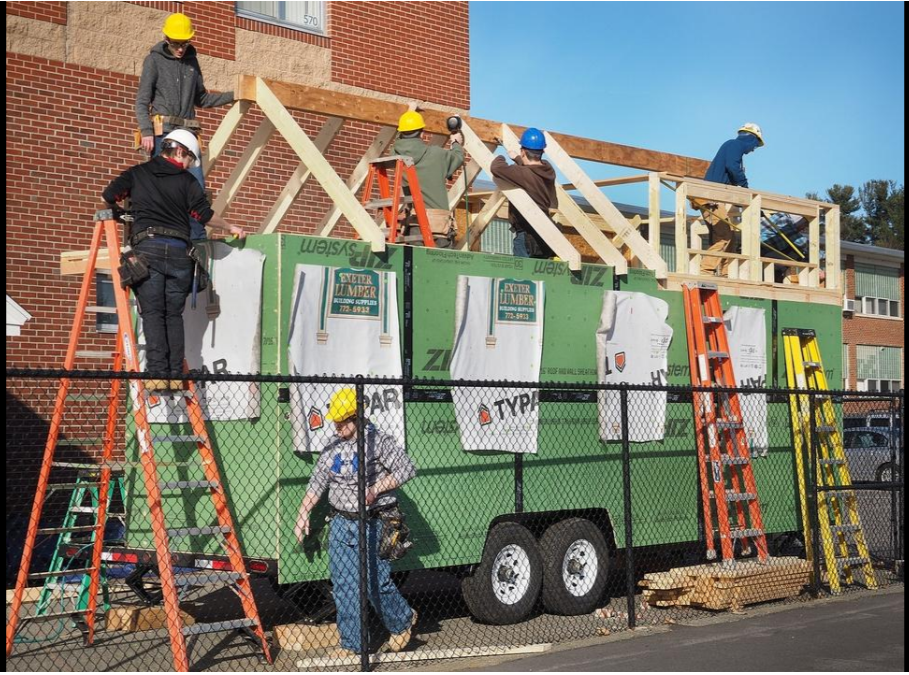
Four CTE centers in New Hampshire are joining the tiny house movement. Tiny House New Hampshire is a workforce development program designed to encourage students from career technical centers to consider the construction trades industry. Four schools around the state are taking part in the program. The other schools are Huot Technical Center in the Lakes Region, Kennett High School in North Conway and Alvirne High School in Hudson. The houses will compete against each other in March.
full Seacoast Online article
Dec 22, 2016 | Article
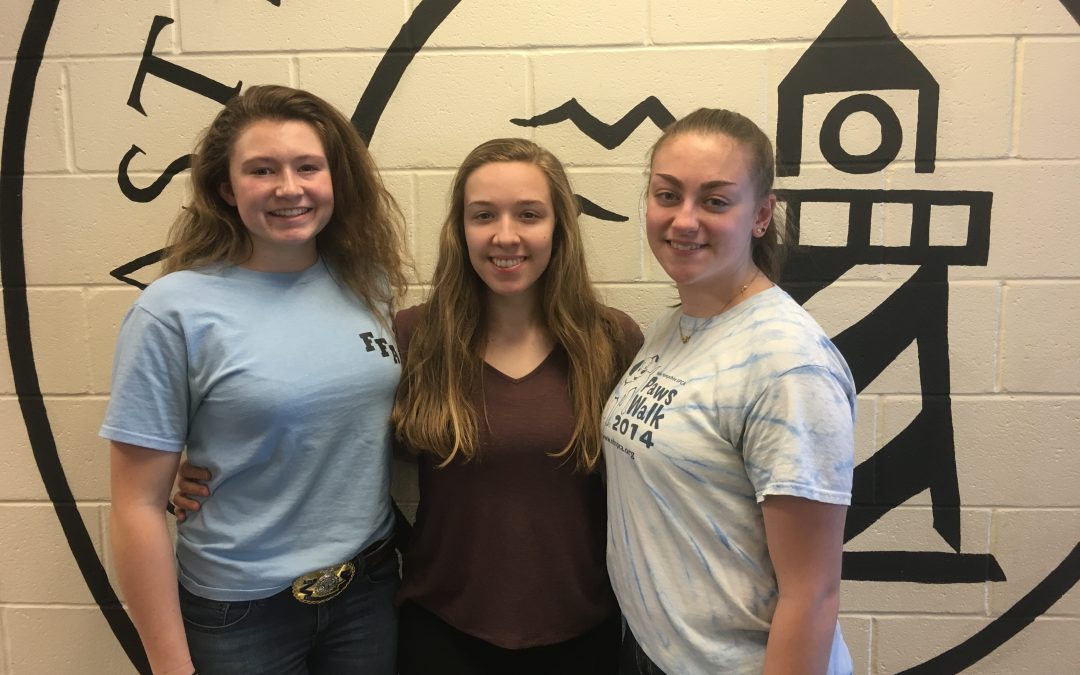
With more than 60 enrolled students, Seacoast School of Technology’s Animal & Plant Science program recently saw three of its own—seniors Jalin Marston, Rebecca Bernier and Madelyn Bentz—achieve success at the national level. Competing in October at the National FFA Convention & Expo in Indianapolis, Marston secured a gold while Bernier and Bentz grabbed a silver and bronze, respectively.
Instructor Anne Demarco said she could not be more proud of their accomplishments. “The girls learned a lot—it was an eye-opening experience for them,” she said. “They did outstanding.”
The students qualified for the national competition after winning at the state level with a project in aquaponics where they grew plants by using fish waste in a re-circulating system. At the national convention, students were presented with written tests and asked to participate in a mock press conference about their project with each student fulfilling a particular role. They also presented in front of a panel of national judges with a project proposal that was submitted in August.
“Our job was to focus on one area for the competition, which was agricultural communication, so it involved marketing and journalism,” said Marston. “The purpose was to communicate about an innovative practice to the surrounding communities.”
Demarco said their performance was even more incredible given the fact the students had only worked together for one year. Whereas the programs at SST are two years, she said those of other states are 4 or 6 years. Some CTE programs in NH offer up to 4 years of instruction as well. “Other kids around the country get to specialize where we provide a little bit of everything in our program,” she added.
Noting one relatively new addition to her program is sustainable agriculture, Demarco said there are a number of skills her students are developing in addition to technical knowledge.
“They are definitely learning team work, time management and working under deadlines,” she said. “They are learning perseverance and networking, problem solving. They are also learning to be courteous and respectful, as we send them to other professionals when they are doing research. The students learn a lot of important skills that will transfer across many areas.”
As for the experience at the National FFA Convention & Expo itself, Bentz said they were “really proud” of themselves. She said the takeaway from her participation at the event national convention was that she is not alone in her ambitions. “It was great to see so many students with such passion for agriculture,” she said. “All across the country, there are teenagers who want to make a difference.”
Noting there were substantial expenses incurred to make the trip to the national convention, Bernier said it was worth it. She cited a private donation from the Pomona (5th Degree) Grange for the area East Rockingham Pomona as instrumental in their ability to also enjoy themselves outside of the competition. “We went to a rodeo and concerts—it was a lot of fun,” she said.
According to all three students, Seacoast School of Technology’s Animal & Plant Science program has been a great experience. They each also expressed gratitude at the additional opportunity to participate in the National FFA Organization.
Referring to it as “a family,” Bentz said FFA provides leadership and professional opportunities. “Whenever you wear one of these iconic FFA blue corduroy jackets, the feeling is indescribable,” she said.
Bernier agreed and added, “All of the jackets on the back have the state you are from and the chapter you are in and an emblem that signifies that everyone is together. We are all potentially a family. We respect each other and we are part of the same organization.”
In summing up what she hopes all students ultimately take from Seacoast School of Technology’s Animal & Plant Science program, Demarco cited a “belief” they can solve anything.
“These kids are capable of thinking outside the box with the skills they have developed here,” she said. “I hope they have also developed an appreciation for the huge field of agriculture—it ties into everything and every industry….Whether we are feeding the world, saving the environment, or helping someone’s pet, our field makes the world a better place.”
Photo Credit:
Left to Right: Jalin Marston, Madelyn Bentz and Rebecca Bernier
Dec 22, 2016 | Article
While the existence of robots still seems like science fiction for many parents, today’s students are actively programming and working with them in anticipation of entering an increasingly technology-oriented workplace. Recently, 6 teams from Pinkerton Academy VEX Robotics program tried their hand at designing and programming a robot at Pembroke Academy’s Winter Classic Robotics Competition on Saturday December 3rd.
“Five teams made it to the quarterfinals round and two to the semifinals,” noted Engineering Instructor, and VEX Robotics Advisor Ernie Biron.
Team 241A, however, distinguished itself even further by winning the Design Award for their robot and documentation, which qualifies them for the Regional Finals in February at Manchester Community College.
For Biron, VEX Robotics is unique in its ability to provide a hands-on way for students to learn STEM and how to problem-solve, while also recognizing “the technological wonders around them.” “It shows them how they can become a part of changing the future of technology,” he added.
According to the students themselves, their participation in the program stems from a tangible desire to prepare for this future. “I like [the program] because it gives you a real world outlet,” said Alex Mielens, captain of Team 241A. “We are all thinking ahead—we want to be engineers.”
Fellow participant Nathan Stallings agreed and added, “I personally joined because I want to be a robotic engineer. I want to expand my education and understand how robots work.”
Biron said he is particularly impressed at how the program also demands that students rigorously document their work.
“Students need to keep a running record of how they came up with the design, issues, flaws, corrections, and the engineering and STEM principles used in completing their robots,” he said. “Teams cannot be considered for Design or Excellence awards unless they have a really good document package.”
In addition to learning how to build a robot that meets a specific challenge, the students themselves noted the program also helps build other skills, including team work. Citing ten students on Team 241A, Senior Mike Estes said it can definitely be a challenge to keep everyone involved in the project.
“It’s hard to give work to everybody,” he said. “Everybody is at different grade levels, too—some are freshmen, others are seniors. We run into issues, but work through them.”
Jessica Lacey, a first-year participant in the program, said working in a group has been “an interesting experience.” She said she has been surprised, however, at how working in a group has enhanced her understanding of robotics.
“I’ve worked with VEX parts before, but by working in larger groups I’ve learned a lot from bouncing my ideas off other people and other teams,” she said. “It’s been a huge learning curve for me, but very interesting.”
For younger students unsure as to whether to get involved in a robotics program, first-year participant Stasia Sturdivant said she suggests they attend a competition, which is what she did for her own younger sister.
“I got my 5th grade sister interested by bringing her here during meeting nights, showing videos and bringing her to competitions,” she said. “I think it would piqué a lot of students’ interest.”
In addition to watching his teams perform at and excel in various competitions, Biron said he also especially enjoys the fact that the program continues to grow. Citing this as his 4th year instructing VEX Robotics students, he said his program has more than doubled in size from his first year.
“When I first started, we had only about 20 kids with maybe 10 to 14 coming in consistently,” he said. “Now, I get over 50 and have to turn down some as the teams are way too large at times to be fun.
He said his personal goal is to try and expand the program into Derry’s elementary and middle schools.
“I hope to add more teams as funds or costs come down, but that’s hard as I use the same components to teach my engineering classes,” he said. “For now, I’m just enjoying the hard work put in by our current teams who are representing Pinkerton Academy proudly.”
Biron said he also takes pride in the accomplishment of a former student. “One of my past students started a college team at UNH last year,” he added. “It’s exciting to see that, too.”
Photo Credit:
Pinkerton Academy Vex Robotics students
l-r front row – Jessica Lacey, Stasia Sturdivant ( both first year robotics students)
l-r back row – Mike Estes, Alex Mielens, Nate Stallings, Austin Caux (all 3-4 year robotics students)