Nov 20, 2017 | Building & Construction Trades, Tid Bits
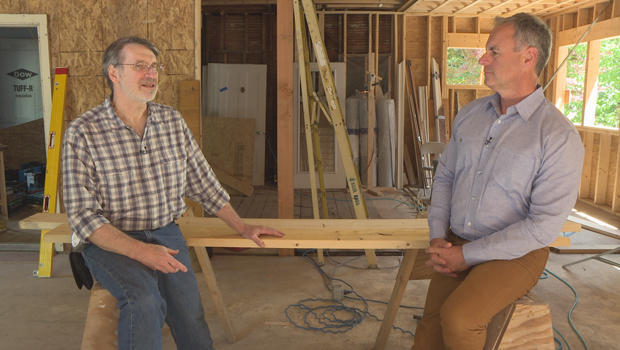
It’s been a month since Hurricane Harvey devastated the city of Houston and Southeast Texas. Damage estimates go up to $190 billion. The cleanup has begun, but a major shortage is looming for the rebuilding effort. It’s not a lack of will, or money; it’s a lack of skilled labor … a national shortage that’s reaching a crisis stage. full article
Nov 20, 2017 | Article, Automotive
Nicholas Raynes of Exeter received a $1,000 scholarship from the New Hampshire Automotive Education Foundation (NHAEF). He was given an additional $1,500 scholarship last year. Nick is in his second year at Nashua Community College, where he is pursuing an associate degree in automotive technology. In addition to his studies, Nick is working in the service department at AutoFair Hyundai in Manchester.
He graduated from Exeter High School in June 2016, taking automotive technology courses at the Seacoast School of Technology in Exeter. An auto tech career is high tech with high wages and low tuition at NH’s Community Colleges. Techs in NH make $58,000 on average and there are over 400 jobs that need to be filled. NH’s community colleges offer 2-year associates degrees in auto tech for roughly $20,000 including the cost of tools. Scholarships like NHADA’s lower that cost even more. Auto tech students can leave school with no or low debt if they take advantage of paid internships, as well as summer full time employment.
The NHAEF has awarded $315,500 in scholarships since its inception. It is a not-for- profit affiliate of the New Hampshire Automobile Dealers Association (NHADA), a statewide trade association with a staff of 31 professionals, representing approximately 500 businesses in the motor vehicle industry with over 14,000 employees. NHADA members run the entire gamut of the motor vehicle industry, including new-car and -truck dealers; motorcycle and recreational vehicle dealers; farm, power, and construction equipment dealers; used-vehicle dealers and recyclers; repair shops, body shops, and parts stores; and other companies that have ties with the motor vehicle industry. Annual retail sales for all members are in excess of $3.8 billion and account for over 24 percent of all retail sales in New Hampshire. More information can be found at www.nhada.com. NHADA also includes affiliate organizations: the NHADA Workers’ Compensation Trust; NHAD Services, Inc., and NHAD Insurance Trust.

Nov 13, 2017 | Arts, A/V Technology & Communication, Awards, Film/Video & Photographic Arts, Other, Radio & Television Broadcasting Technology, Tid Bits
On November 3rd, Keene High School teacher Jeremy VanDerKern was one of 12 New England educators presented with the
Lawrence O’Toole Award for student-centered learning by the Nellie Mae Education Foundation. This award comes with a $15,000.00 grant that Jeremy plans to use to create video series with his students highlighting Career & Technical Education.
video
Nov 13, 2017 | CTE Promotion, Tid Bits
Reaching Higher NH recently released series of videos focused on CTE in NH. Vote for the one that speaks to you and be entered to win a $250 VISA gift card! videos and voting
Nov 10, 2017 | Article
A 4-year college or university is not the only pathway to a successful career, which is something Joe Peterson wishes he knew when he graduated high school in 2008. Acknowledging he felt pressure to attend post-secondary school of some kind while also admitting he had no concrete plan for his future, he enrolled in a community college and earned an associate’s degree in software development. His “plan,” however, did not go according to plan.
“I worked three jobs while going to school and my degree turned out to not be worth the weight of the paper it was printed on,” he said.
For Peterson, his inability to formulate a plan for his future had nothing to do with a lack of ambition.
“I was a run of the mill straight ‘C,’ student, but it was a reflection of my interest in what was happening in the classroom rather than my intelligence,” he said.
In 2011, though, he heard about opportunities at Hitchiner Manufacturing Co., Inc.
“I got a job in the foundry and could afford to work one job,” he said. “I felt I could get put my head down and work, get stable and then reevaluate things at a later date.”
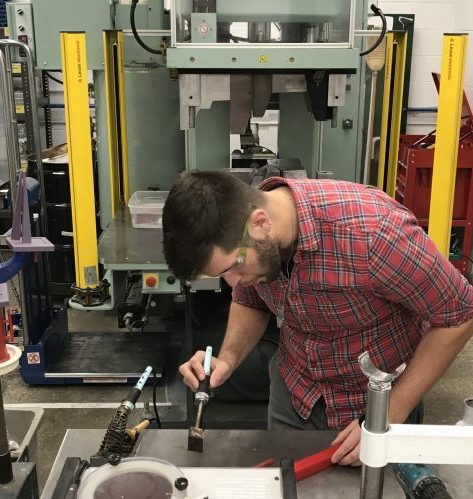
In 2014, Peterson was approached by Hitchiner to enter its “Path to Success – Hitchiner Succession Leadership Program.” Developed in 2013 by senior leadership at the company, the program provides a path for hourly employees to become a quality, product, process or manufacturing engineer without the need to obtain a bachelor’s degree in engineering.
“I took classes at Hitchiner facilitated by Keene State College and and classes at Manchester Community College,” said Peterson. “Hitchiner covered it, too. I think the only thing I had to pay for out of pocket was one book.”
After two years, he said he was offered “a step up” at the company, which directly resulted from his participation in the program. In May of this year, he was offered and accepted a salaried position as an associate engineer at the company.
“It’s been a great experience,” he said.
According to Tim Sullivan, Vice President, Corporate Affairs and Services at Hitchiner, Path to Success addresses a core need at the company and in the manufacturing industry itself.
“Unemployment at 2.5 % will be sustained through 2020, and we know we need to add to our workforce—maybe a couple hundred new employees,” he said. “The question is how do we attract new people?”
The answer, according to Sullivan, includes multiple “value propositions.”
“We offer a free health care clinic on-site, so that along with Path to Success and tuition assistance are our ways of providing alternatives to high school graduates,” he said. “Come to Hitchiner, earn a good wage, learn a trade and have zero college debt…Other companies in our industry are doing the same thing.”
On November 28, Peterson will talk to students at ConVal Regional High School about his experience at Hitchiner.
“My takeaway is that there does not need to be a rush for students to go into a four-year school when you turn 18,” he said. “Had I been introduced to a manufacturing environment when I was younger, I would have focused on that.”